Showing posts with label Animal Welfare. Show all posts

Saturday, September 26, 2009

Biggest Dogs, Smallest Dogs!

Biggest Dogs, Smallest Dogs!

A collection of the dogs from the biggest to the smallest, from the Chihuahua to the English Mastiff and the Great Dane! Eisenhower said, "What counts is not necessarily the size of the dog in the fight — it's the size of the fight in the dog." So very true!

SMALLEST

"Danka", a long-haired Chihuahua from Revuca, Slovakia, weighed in at just 27 oz (7.4" long). Danka is very small even for a Chihuahua! "Danka who isn't that keen on dog food only eats a small amount of dry food crushed up", Owner Kvetko said.

Chihuahua Danka Smallest
Smallest - Chihuahua Danka
Chihuahua Danka Smallest
Smallest - Chihuahua Danka

BIGGEST (LIVING)

"Hercules", an English Mastiff with a 38" neck, is the current record holder at 282 lbs. His guardian John Flynn (who ain't so shabby himself at 270 lbs) says he once saw a bird roosting on Hercules' head. Hercules just sat there blinking, says Mr. Flynn. "He's not the smartest dog in the world, that's for sure."

Biggest - English Mastiff Hercules

SHORTEST

Brandy", a Chihuahua from Florida, weighs 2 oz more than Danka but measures only 6" from the tip of her nose to the end of her tail. Now there's a dog who has a good reason to be afraid of the vacuum cleaner.

Shortest Chihuahua Brandy

BIGGEST (EVER)
In 1989, an English Mastiff named "Zorba" tipped the scales—or should I say demolished the scales—at a whopping 343 lbs at the age of 8.

English Mastiff Biggest
An English Mastiff

TALLEST
Try telling a 7 ft tall dog not to drool on the dinner table. "Gibson", a Harlequin Great Dane from Grass Valley, California, is 42.2 inches when standing on all fours, and when he's on his hind legs he's positively stratospheric. This dog is so tall he has to bend down to howl at the moon. He's so tall he doesn't drink out of the toilet; he drinks from the bidet. He's so tall he doesn't understand "heel". You have to say, "Skull!" He's so tall... ok I'll stop now

Tallest Great Dane Gibson
Tallest Great Dane - Gibson
Tallest Great Dane Gibson
Tallest Great Dane - Gibson

LARGEST
"Moose" weighed in at 286 lbs when he was named "largest dog in America" on Live with Regis & Kelly in Nov 2001. Moose's guardian Donna Vazquez considers that to be a low estimate because his butt wouldn't fit entirely on the scale.

Largest Dog Moose
Largest Dog Moose

Friday, September 25, 2009

Top 10 Transparent Animals!

Top 10 Transparent Animals!

Here are the most interesting transparent animals, from icefish to jellyfish to frogs to butterflies! Nature sure is very interesting!

Top 10 Transparent Animals!

  1. Transparent Frog

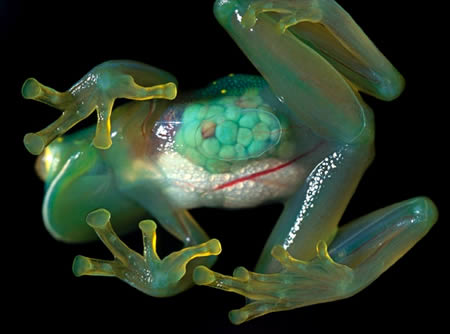
    Transparent Frog

    Native to Venezuela, the Glass Frogs belong to the amphibian family Centrolenidae (order Anura). While the general background coloration of most glass frogs is primarily lime green, the abdominal skin of some members of this family is transparent, so that the heart, liver, and digestive tract are visible through their translucent skin. (Photo by Heidi and Hans-Jurgen Koch)


  2. Transparent Head Fish

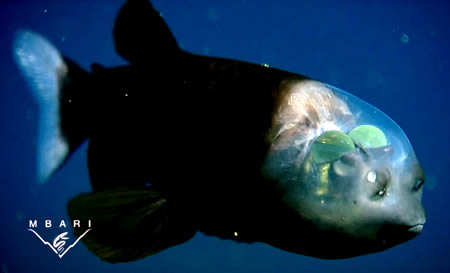
    Transparent Head Fish

    This bizarre deep-water fish called the Barreleye (Macropinna microstoma) has a transparent head and tubular eyes. It has extremely light-sensitive eyes that can rotate within his transparent, fluid-filled shield on its head, while the fish's tubular eyes, well inside the head, are capped by bright green lenses. The eyes point upward (as shown here) when the fish is looking for food overhead. They point forward when the fish is feeding. The two spots above the fish's mouth are not eyes: those are olfactory organs called nares, which are analogous to human nostrils. (Photo by MBARI)


  3. Transparent Butterfly

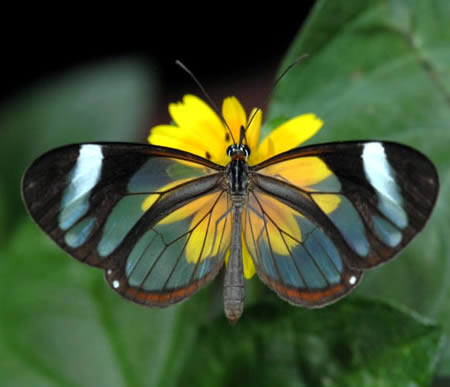
    Transparent Butterfly

    Found in Central America, from Mexico to Panama, the Glasswing Butterfly (Greta Oto) is a brush-footed butterfly where its wings are transparent. The tissue between the veins of its wings looks like glass. (Photo by Hemmy)


  4. Transparent Squid

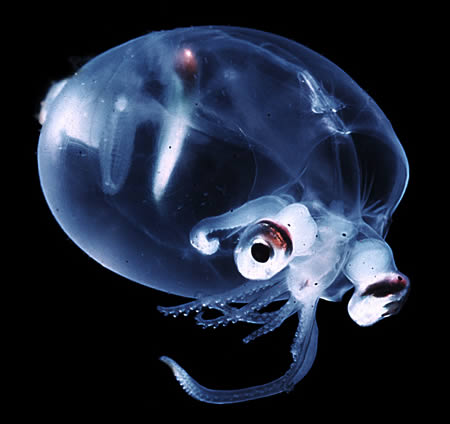
    Transparent Squid

    Found on the southern hemisphere's oceans, the Glass Squid (Teuthowenia pellucida) has light organs on its eyes and possesses the ability to roll into a ball, like an aquatic hedgehog. It is prey of many deep-sea fish (eg goblin sharks) as well as whales and oceanic seabirds. (Photo by Peter Batson)


  5. Transparent Zebrafish created by scientists

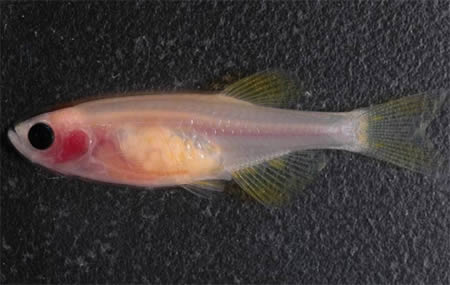
    Transparent Zebrafish created by scientists

    This see-through zebrafish was created in 2008 by scientists so they can study disease processes, including the spread of cancer. The transparent fish are allowing researchers at Children's Hospital Boston to directly view fish's internal organs and observe processes such as tumor growth in real-time in living organisms. (Photo by LS)


  6. Transparent Icefish

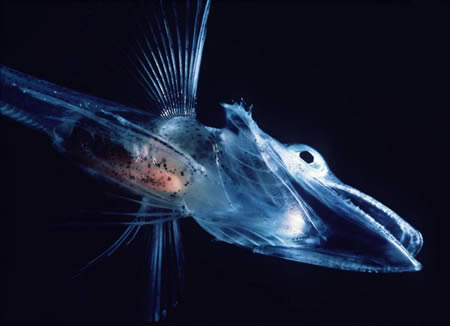
    Transparent Icefish

    Fund in the cold waters around Antarctica and southern South America, the crocodile icefish (Channichthyidae) feed on krill, copepods, and other fish. Their blood is transparent because they have no hemoglobin and/or only defunct erythrocytes. Their metabolism relies only on the oxygen dissolved in the liquid blood, which is believed to be absorbed directly through the skin from the water. This works because water can dissolve the most oxygen when it is coldest. In five species, the gene for myoglobin in the muscles has also vanished, leaving them with white instead of pink hearts. (Photo by uwe kils)


  7. Transparent Amphipod

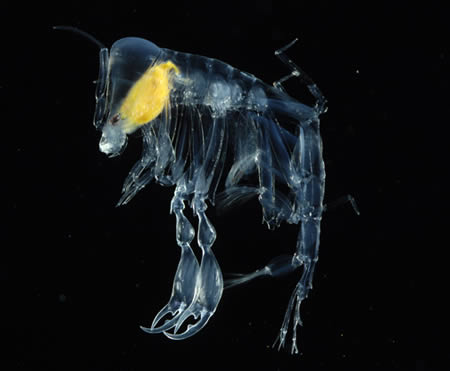
    Transparent Amphipod

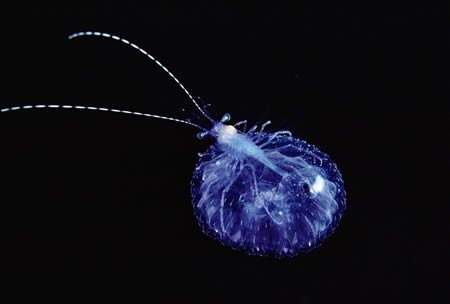
    Called Phronima, this unusual animal is one of the many strange species recently found on an expedition to a deep-sea mountain range in the North Atlantic. In an ironic strategy for survival, this tiny shrimplike creature shows everything it has, inside and out, in an attempt to disappear. Many other small deep-sea creatures are transparent as well, or nearly so, to better camouflage themselves in their murky surroundings, scientists say. (Photo by David Shale)


  8. Transparent Larval Shrimp

    Transparent Larval Shrimp

    Found in the in the waters around Hawaii, this transparent larval shrimp piggybacks on an equally see-through jellyfish. (Photo by Chris Newbert/Minden Pictures)


  9. Transparent Salp

    Transparent Salp

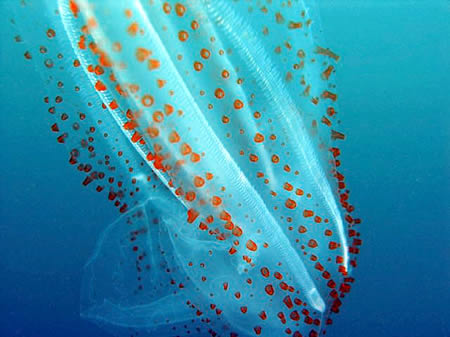
    This jellyfish-like animals known as Salps feed on small plants in the water called phytoplankton (marine algae). They are transparent, barrel-shaped animals that can range from one to 10cm in length. (Photo by DM)


  10. Transparent Jellyfish

    Transparent Jellyfish

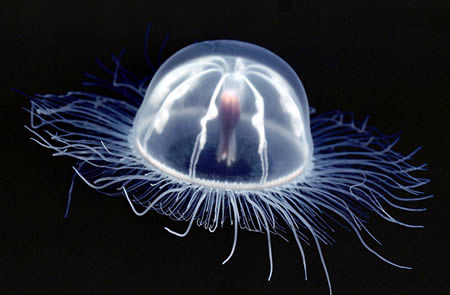
    Jellyfish are free-swimming members of the phylum Cnidaria. They are found in every ocean, from the surface to the deep sea. Many jellies are so transparent that they are almost impossible to see. The one above is from the Arctapodema genus, with a size of an inch-long (2.5-centimeter-long). (Photo by Bill Curtsinger)

Thursday, September 24, 2009

11 Recently Extinct Animals Photographs

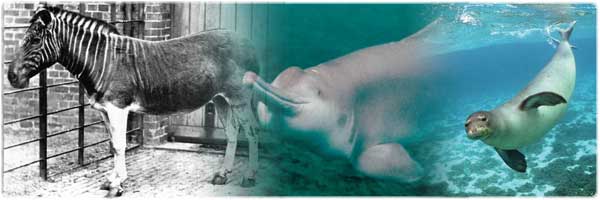
Here is a list of 11 extinct animals that were photographed while still alive. Includes the Tasmanian Tigers, Quagga, Passenger Pigeon, Golden Toad, Caribbean Monk Seal, Pyrenean Ibex, Bubal Hartebeest, Javan Tiger, Tecopa Pupfish, Syrian Wild Ass& the Baiji River Dolphin. The current rate of extinction is 100 to 1000 times higher than the average, or background rate, making our current period the 6th major mass extinction in the planet’s history!
Extinct Animals

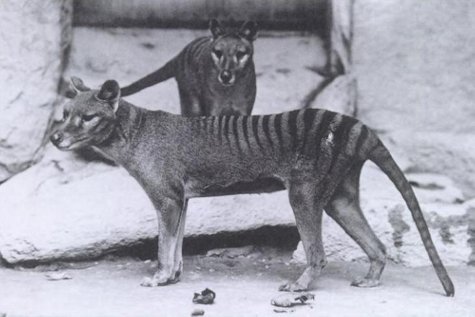
Tasmanian Tiger


Extinct Animals
Extinct Animals
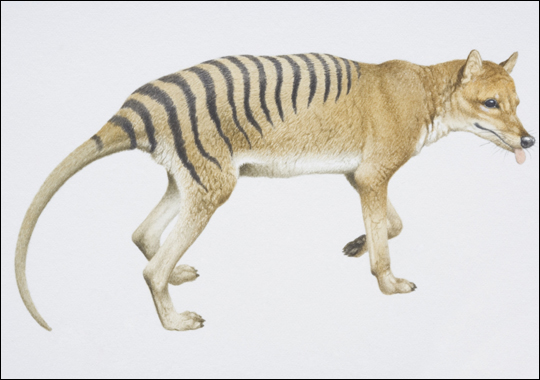
The last Tasmanian Tiger, or Thylacine, known to have existed died in the Hobart Zoo, in Tasmania, Australia, on September 7th, 1936. Despite being the last of its kind, the animal (named “Benjamin”) likely died due to neglect after being locked out of its sheltered quarters during extreme weather.

Although commonly referred to as ‘tigers’, and despite having the look of a canid, the Thylacine isn’t remotely related to cats or dogs. Rather, it was the largest carnivorous marsupial of modern times, meaning it carried its young in a pouch. Its closest living relative is the Tasmanian Devil.

The biggest cause of their extinction in the wild was a massive hunting campaign instituted by the Tasmanian government from 1888 to 1909, justified because the Thylacines were believed to be a threat to sheep and hens. The last known wild Tasmanian Tiger was killed by a farmer named Wilf Batty in 1930, after spotting the animal around his hen house.


Quagga
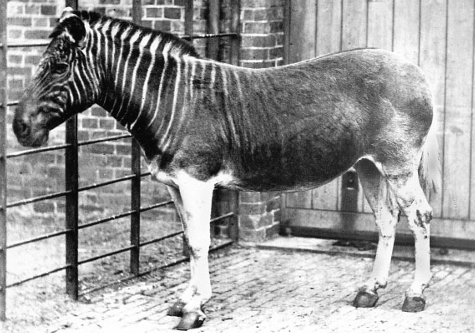

Extinct Animals

The Quagga was a unique variety of Plains Zebra, marked by having stripes only on the front of its body, with hair color transitioning toward a light brown or tan along its rear and underbelly, until becoming white along its legs. This picture represents the only Quagga ever to have been photographed alive, taken at the London Zoo in 1870.

Its unique hide made the Quagga a target for hunters and poachers, and the last known wild Quagga was probably killed in the late 1870’s. The species went extinct on August 12th, 1883, when the last specimen died at a zoo in Amsterdam, The Netherlands.
Passenger Pigeon


Passenger Pigeon
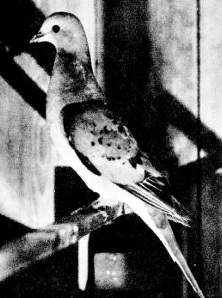

Extinct Animals

The story of the Passenger Pigeon is one of the most tragic extinction stories in modern times. As recently as around 200 years ago they weren’t anywhere near extinction. In fact, they were actually the most common bird in North America, and some reports counted single flocks numbering in the billions.

Colonial hunters happened. The pigeon meat was commercialized and recognized as cheap food, especially for slaves and the poor, which led to a catastrophic hunting campaign on a massive scale. Furthermore, due to the large size of their flocks, the birds were seen as a threat to farmers. In fact, in 1703 the Catholic bishop of Quebec actually excommunicated the entire species.


Golden Toad
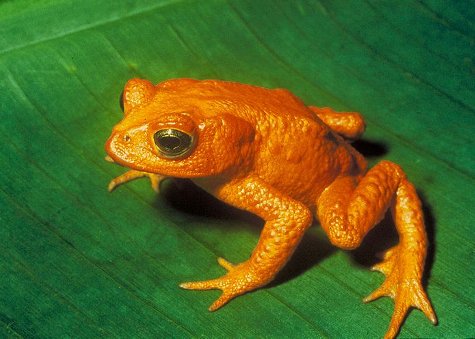

Extinct Animals

The first recorded account of the Golden Toad was by herpetologist Jay Savage in 1966, and the last sighting of the species was made in 1989. The toad, showcased by its brilliant golden orange colorization, was native to the tropical cloud forests which surround Monteverde, Costa Rica.

Their extinction symbolizes a large scale decline in amphibian numbers worldwide over the last several decades, which has likely been caused by global warming and climate change. In fact, famed Australian biologist Tim Flannery has described the extinction of the Golden Toad to be the first demise of a species due primarily to global warming.

Caribbean Monk Seal
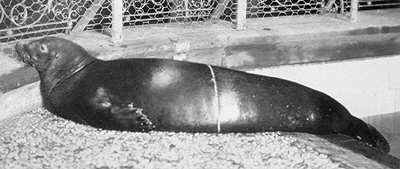

Extinct Animals
Extinct Animals
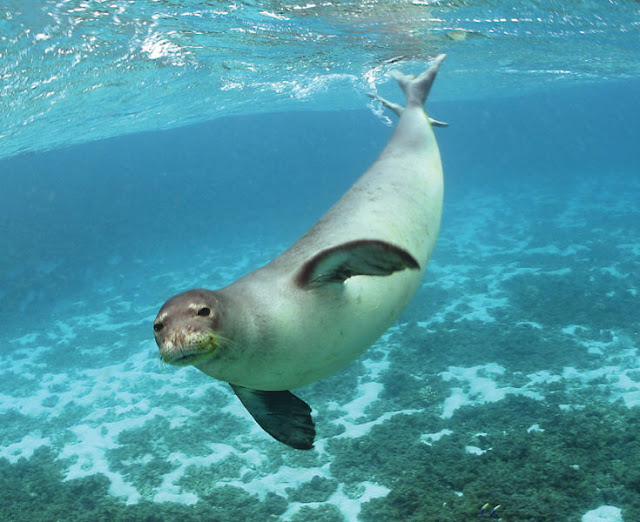
The Caribbean Monk Seal was the only known seal which was native to the Caribbean Sea and the Gulf of Mexico. It is also the only species of seal to go extinct directly due to human causes. It was officially declared extinct just last year, on June 6th, 2008, although the last recorded account of the species was made at Serranilla Bank between Honduras and Jamaica in 1952.

Their eventual demise, brought on by human hunting, was symbolized during Columbus’ 1494 voyage, when the tiny seals were described as “sea wolves” and 8 were recorded to have been killed and slaughtered for their meat.


Pyrenean Ibex

Extinct Animals

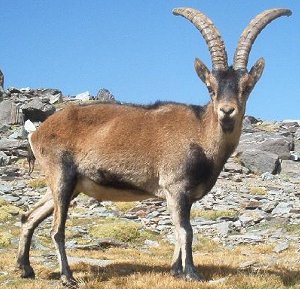
The Pyrenean Ibex has one of the more interesting stories among extinct animals, since it was the first species to ever be brought back into existence via cloning, only to go extinct again just seven minutes after being born due to lung failure. Here at Ecoworldly, we reported on the event, which happened in January 2009.

The last naturally born Pyrenean Ibex died on January 6th, 2000, after being found dead under a fallen tree at the age of 13. That animal’s only companion had died just a year earlier due to old age. Although the recent effort to resurrect the Ibex was short-lived, the event does bring optimism, and raise serious debate, about whether extinct creatures should be given a second chance.


Bubal Hartebeest

Extinct Animals
Extinct Animals
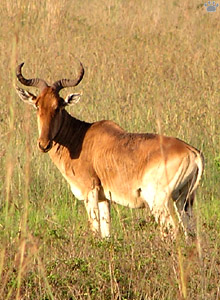
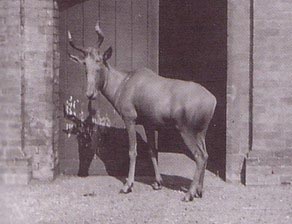
The Bubal Hartebeest was a magnificent, tough beast which was once domesticated by the ancient Egyptians as a food source and for sacrificial purposes. The creature was even mentioned in the Old Testament.

Although it once roamed throughout Northern Africa and the Middle East, the deep-rooted mythology which surrounded the animal was not enough to save it from European hunters who began hunting them for recreation and meat. The last Bubal Hartebeest was probably a female which died in the Paris Zoo in 1923.


Javan Tiger

Extinct Animals
Extinct Animals
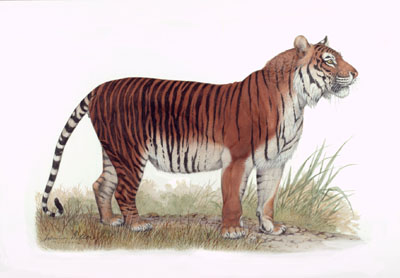
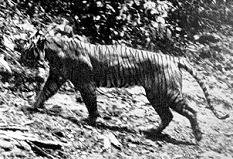
Javan Tigers are a subspecies of tiger which were limited to the Indonesian island of Java. The last specimen to have been seen was sighted in 1972, although there is evidence from track counts that the animal had lingered into the 1980’s. The last track counts to yield evidence of the tigers was held in 1979, when just three tigers were identified.

The leading cause of their extinction was agricultural encroachment and habitat loss, which continues to be a serious concern in Java.

There are some who believe that Javan Tigers could still be alive in some of the island’s few remaining forested regions, although even so, the tiger’s numbers would be so low that the species would still be functionally extinct. The region most likely to contain a tiger today would have to be the Meru Betiri National Park, although even that area is now being threatened by mining companies after the discovery of gold nearby.


Tecopa Pupfish

Extinct Animals

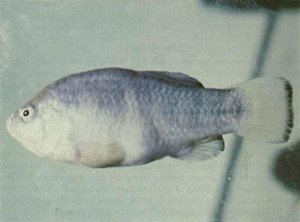
The Tecopa Pupfish has the unfortunate distinction of being the first species to be declared extinct under the Endangered Species Act of 1973. The official de-listing of the animal came in 1981.

The fish were first discovered in the Tecopa Hot Springs in California in 1942, and their decline followed shortly thereafter, as the Hot Springs were canalized and replaced with bathhouses. The final nail in the coffin came when hotels and trailer parks were built nearby to allow for more comfortable recreation for tourists.

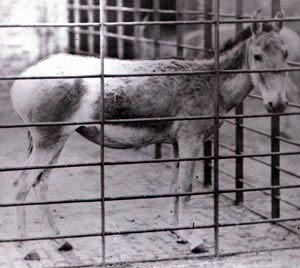
Syrian Wild Ass

Extinct Animals

The Syrian Wild Ass was likely extinct when the last known captive animal died at the Schönbrunn Zoo in Vienna, Austria, in 1928. It once had a wide range throughout Mesopotamia, where reports were common of large herds which used to roam wildly in the mountains and desert steppes of the Middle East.

Although already threatened beforehand, it is said that the Syrian Wild Ass completely collapsed during World War I, when their habitat was overrun with heavily armed Turkish and British troops. One account remarked that ”it could not resist the power of the modern guns in the hands of the Anazeh and Shammar nomads, and its speed, great as it may have been, was not sufficient always to escape from the velocity of the modern motor car which more and more is replacing the Old Testament Camel-Caravan.”


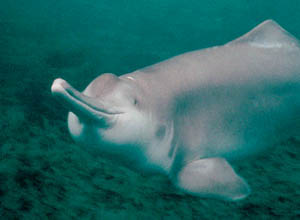
Baiji River Dolphin

Extinct Animals

The inevitable appears to have arrived for the Baiji River Dolphin, a peaceful, majestic dolphin which had inhabited China’s Yangtze River for at least the last 20 million years. The dolphin was declared functionally extinct after an expedition late in 2006 failed to record a single individual after an extensive search of the animal’s entire range.

Friday, September 18, 2009

Indian Animal Care Organisations

Indian Animal Care Organisations [ACOs]


All India Animal Welfare Association-AIAWA
E/14, Venus Apartments, R.G. Thandani Marg
Worli, Mumbai 400018
Phone: (022) 4930776 / 3094077

ALAS - Animal Lovers Association Society
Jaykar smurti, shop no. 55,
Aarey Road,
Opp rajasthan hall
Goregaon [w], Mumbai 400 062
Bhavin Gathani 98204 76622

Tel: 28763856
Fax: 28761313
Emergency van with 125 drugs: all mumbai: 98203 19842
Animal Welfare Association
601 SAMANYA Society
PLOT NO.13
KHARGHAR
NAVI MUMBAI 410 210
Renu Rai
Tel: 2756 2275 / 3109 7720
Animal Birth Control & Health Care Centre
Near Deonar Colony,
Bainganwadi
Deonar
Mumbai 400 088
Sudnya Patkar 24142195 / 24143412
Tel: 25566795
Notes: 250 neutered / month
Bahena Trust
Telecast, RRT Road
near Canara Bank
Mulund (W), Mumbai 400 080
Dinesh Visariya
Tel: 25673838 / 25654949 / emergency number 1919
Fax: 25690202
Bombay Presidency Kennel Club
9 Garden Homes
1st Road, Khar (W),
Mumbai 400 052
Sheila Naharwar, Hon Secretary
Phone: 26000146
Bombay SPCA
Dr. S. S. Rau Road
Parel
Mumbai - 400012
Phone: (022) 413 7518, 413 1007, 413 5285, 413 5434
Indian National Kennel Club
secretary Mrs. Ratty P Javeri
Home: 22029106 Mobile: 98201 41328

Karuna
for Animals in Distress
Mukti Nivas, Shop no. 3 (Tasyani Print-O-Graph)
V.P. Road, Opp. Bby Mercantile Coop Bank,
ANDHERI (W), Mumbai 400 058

Arvind Shah
Tel: 26701413 / Emergency number 9819 100 100
Bhavin Shah 28763856 / 98204 76622
Notes:
Karuna = Compassion; Got 8 ambulance

Mumbai Canine Club
5/A Sham Dham,
Opp. Sion Railway Station,
Sion (W), Mumbai 400022
Mr. R. C.Lingam, Mahesh Chaudhary
Phone 24076005 / 24096762
Notes: affiliated to Kennel Club of India, animal dog shows and pet shows, encourages good dog ownership, 400 members, promoting Indian breeds,

Nature & Animal Care Foundation
104/106 Meghji Bldg, 'C' Block, Room 3 / 35,
Wallace flour Mills
Shivdas Champsi Marg
Mumbai 400 009
Dharmesh Solanki, hon. secy., 98212 15661
notes: new org; focus is to create awareness; see PFA

PAWS - Plant & Animals Welfare Society
Shiv-Shakti, Patkar Compound,
Gamdevi Road,
Bhandup (West), Mumbai 400 078

Mr. Sunish Subramanyam
Tel / Fax:: 2591 8324 / Nisha
notes: Activities: Wildlife Rescue & Rehabilitation; Treatment of Injured animals on the roadside; Educating Students on animal welfare; Organising Anti - Rabies Vaccination for strays, etc.; snake rescue, injured bird treatment. Area of Work : Mumbai, Navi Mumbai, Thane Area.

A-14 Savitri Sadan
Dr. Mukharji Road
Dombivli (East) 421201
Karmayogi: Mr. Nilesh Bhanage 98201 61114
Tel: 95251 - 471996 ( 8 to 10 pm)

PALS - Plants and Animal Lovers Society
2 "Ferena", Opp. Fariyas Hotel
Colaba
Mumbai 400005
Dr. Silloo Bhagvagar (mornings)
Tel: 22832955
email: silloob@vsnl.com
Notes: First aid, sterilisation, rescue, rehab

People For Animals - Mumbai
C/o P.N. Mehta & Co. (Diana Mehta)
Thomas Cook Bdg, 3rd Fl
D.N. Rd, Fort, Mumbai 400 001
Cawas Lalkaka, Pritish Nandy
Tel: 56242112 / Dharmesh Solanki, Mgg. Trustee 98212 15661
Notes: A Maneka Gandhi Initiative; ambulance; camps; feeds dogs and cats; donates to those feeding dogs and cats; rescue and rehab; co-ords with BSPCA

Pet Practitioners Association of Mumbai (PPAM)
Dr. Wakankar (president)
Dr. Karkare, 26483199, 98201-47546

Save Our Strays
Karmayogi: Sherley Advani - Founder Trustee
Tel: 9820141310 (Andheri)
Notes: Got 1 ambulance

Stray Dog Lovers Association (Voice of the Animals in Distress)
G 20, RH-V, Sector VI, Vashi
New Mumbai 400703
Phone: (022) 7662784

Shree Vardhaman Jivadaya
C/o Ashok General Stores
200, 3rd Khumbarwada, Somji Building
Mumbai 400004
Phone: (022) 3866568 / 3888893 / 38889961

Shree Jivdaya Pariwar Charitable Trust
Animal Shelter at Vapi
Plot no: 165/B-7
GIDC Phase - 2
Vapi (Dist: bulsar)

Mumbai Office: 307 Mandvi Navjivan
121/127 Kazi Sayed Street,
Masjid West
Mumbai - 400 003

SPAN - Society for the Protection of Animals and Nature
201, B, Sheetal Sargam,
Sheetal Nagar,
Mira Road (East).
Mumbai
Tanya Singh, Barbara LaPorte.
Tel. 28112462, 28908945, 982029288, 9820541871
Stray Dog Lovers Association / Voice of Animals in Distress
G 20 Row House type V,
Sector VI, Vashi,
Navi Mumbai 400703
Dr. Sadhana Phaterpekar, Founder President
Tel: 27822784

The Welfare of Stray Dogs
403, Seacraft, Woodhouse Road
Colaba, Mumbai 400026

The Bombay Humanitarian League Dayamandir
123/127, Mumbadevi Road, 2nd floor
Mumbai -400023
Phone: (022) 34255574 / 3446024

World Wildlife Fund (WWF)
National Insurance Building, 2nd Floor
Opposite Central Camera
204, Dr DN Road, Fort
Mumbai - 400001
Phone: (022) 2071970, 2078105

(WSD) Welfare Of Stray Dogs
C/o Akanksha,
Voltas House C,
T B Kadam Marg
Chinchpokli, Mumbai 400 033
Abodh Aras 98191 00808 / home: 23891070
Tel.: 23733433 Shirley / kennel 23060275
Notes: Dogs; Pet Adoption; free sterilisation centre; onsite first aid till andheri and sion; immunisation; awareness; 150 sterilisations / month; takes the lead on stray dog issues; gives guidelines to those interested in starting an animal welfare org or running sterilisation programs

Zawareh Daruwala
604-C Lakshmi Niwas
Lady Jehangir Road
Dadar, Mumbai-14
Phone 24120433
notes: rescues and trains pedigree dogs to be guard dogs,
35-40,000 The present dog population in Navi Mumbai
The canine population in Mumbai is estimated at being over two lakhs.

Animal Welfare in mumbai

Animal Welfare


NameAddressPhone
BAHENA
9522 - 25654949 ,
BEAUTY WITHOUT CRUELTY
9522 - 22722775 ,
KARUNA
9522 - 39522588 ,
MINISTRY OF ANIMAL
9522 - 22842611 ,
PETA
9522 - 26281880 ,
PLANTS & ANIMAL LOVERS SOCIETY
9522 - 22832955 ,
SPCA
2 413 7518 ,
VINIYOG PARIVAR
9522 - 28991781 ,
WELFARE OF STRAY DOGS (WSD)
9522 - 23733433 ,

Popular Posts