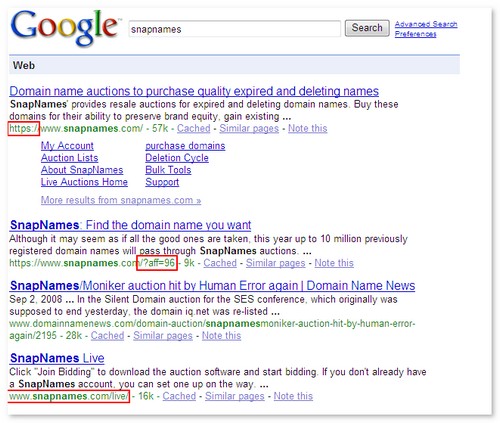
The Google Webmaster guidelines says that “If you decide to use dynamic pages (i.e., the URL contains a “?” character), be aware that not every search engine spider crawls dynamic pages as well as static pages. It helps to keep the parameters short and the number of them few.” It is very true that search engines are less likely to crawl dynamic URLs, there are so many other issues associated with dynamic URL, and we will discuss few of them. To those who are new to web site architecture, I will explain what static and dynamic websites is real quick.
There are two main types of websites – Static websites and Dynamic websites. Static websites are websites that you design using your basic HTML language, and the content of the page remains static. These types of websites normally have an extension .html or .htm. Dynamic websites are websites that use advanced programming languages like PHP or ASP. The websites that re designed using these languages are linked to a database and page information and content is fetched from the databases. Most of the online shopping websites are Dynamic. A dynamic URL is a page address that results from the search of a database-driven web site or the URL of a web site that runs a script. If you look at my blog, the website is entirely designed on Wordpress, which is enhanced by the language PHP. Most of the dynamic websites have a “?” in the URL. We call it as query strings.
The search engines spiders or the so called spiders follows links to the web pages and reads the information it finds. This information are stored in the search engine indices as a copy of the website. This process is called spidering or crawling.
Now coming to the Google webmaster guideline on Dynamic URL’s. If you know how your website is build or which programming language is used to developed your website, you can easily check your website on par with the guidelines. If your website is static html website, this guideline does not apply to your website and you don’t have to worry about that.
if your website used dynamic pages, the google webmaster guidelines clearly indicate that your website may not get indexed. There used to be a Google webmaster guideline stating…
“Don’t use “&id=” as a parameter in your URLs, as we don’t include these pages in our index.”
But that guideline is now gone and they have stated that they now index such pages.
Dynamic pages will get indexed in search engines, but it may take more time than static pages. The search engine would like to index pages that are unique. Search engines decide to combat this issue by “pruning off” the URLs after a specific number of variable strings (i.e. ?, =. &).
Eg: http://www.yourdomain.com/client_portfolio_list.php?company=10might be pruned down to http://www.yourdomain.com/client_portfolio_list.php by the search engine in order to limit the number of repeated content.
Having dynamic URLs with a large number of parameters may problematic for the search engine spiders, it is always better practice to rewrite all the dynamic URLs to static URLs. In your web server you can have a MOD rewrite rule and have all the dynamic pages permanently redirected to the new static pages with a 301 redirect. This is the best practice if you have lot of Dynamic URLs.
Another issue with the dynamic URLs is that it can easily create chances of duplicate pages and hence duplicate content. Search engines usually omit stop words and certain strings to keep the index clean. Omitting some string in the URLs can result in duplicate web pages.
Key points to remember:
If your website is entirely made of static pages, this guideline does not apply to you.
If you use dynamic pages then there is a potential problem with crawling and indexing your web pages completely.
If you use dynamic pages it is better to have less parameter in your URLs
The best way to know your options is to read what Google has stated on this subject. Dynamic pages are discussed often in Google webmaster Forums.
No comments:
Post a Comment